
Criminal Cases in Lafayette County Courts
Lafayette County felony prosecutions are circuit-court matters in Arkansas's 8th South Judicial Circuit. The Lafayette County Circuit Court file can hold the charging paper, motions, hearing entries, plea or trial outcome, judgment, sentence, and later sealing orders. The circuit clerk is the records custodian for those filings and the point of contact for copies that the public index does not supply. Search results should be tied to the displayed court, filing date, and case number, especially when a name is common.
Lower-level criminal records may sit elsewhere. Traffic citations, ordinance cases, violations, and some misdemeanors can proceed in district or city-level courts based on the citing agency and charge. One local event can thus produce a police report, a sheriff booking entry, and a court file held by different offices. The Arkansas Judiciary court directory is the sound source for current court contacts because exact Lafayette County counter details were not consistently available in the research.
Search ARCourts Lafayette Case Index
The Arkansas court directory shows how county courts fit into the state system. The directory is useful when a Lafayette County docket identifies a court but the reader still needs the right clerk. It also avoids sending a district matter to the circuit desk or assuming all city citations become circuit cases.
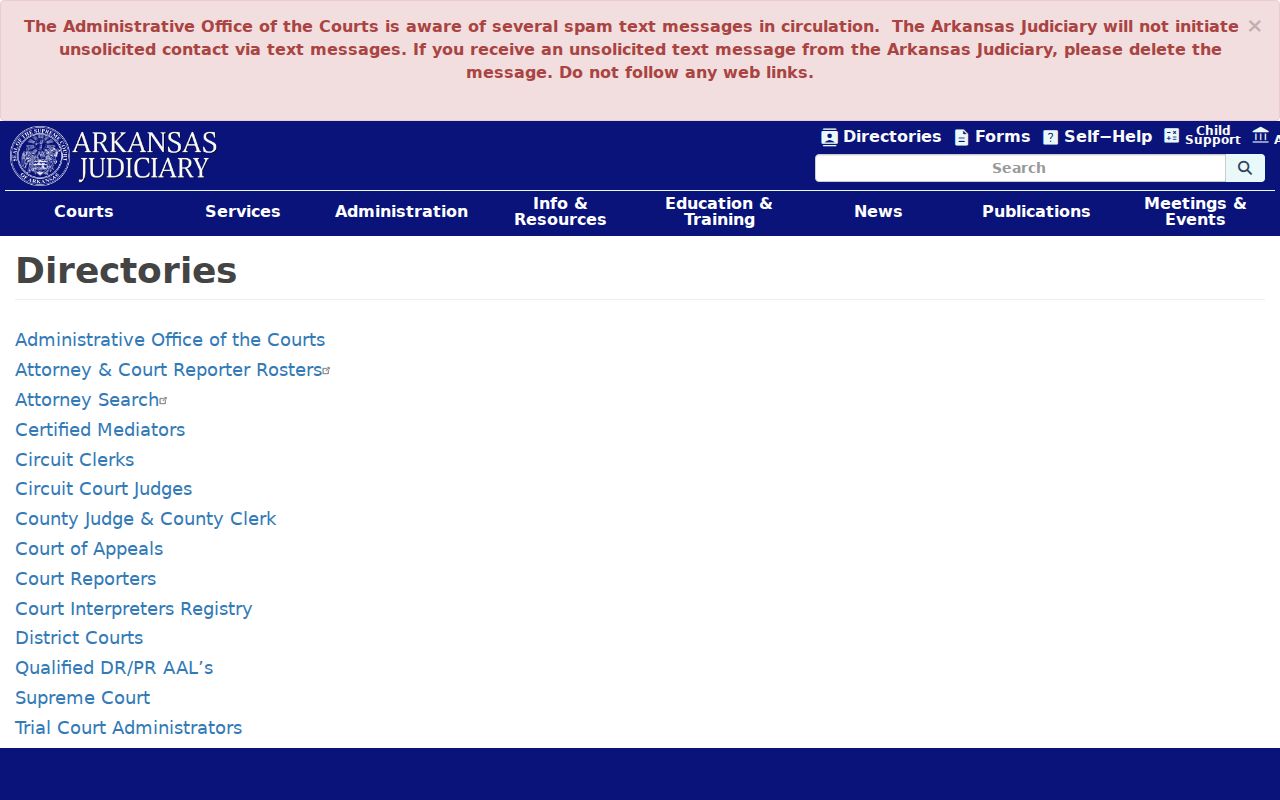
The directory image reinforces an important search habit: identify the court first, then request the file from that court's custodian. Search ARCourts is an index shared across Arkansas, but the underlying Lafayette County file remains with the court that handled the case.
How to Search Case Records
Begin at Arkansas Search ARCourts, the statewide public case index. A case number is the strongest key. A legal name can also work, but it needs Lafayette County, court, case type, or date filters to reduce false matches. The public view may show docket data without offering every pleading as a download, so record the court and case number before contacting the clerk.
- Open Search ARCourts and choose Lafayette County or the known court when those filters appear.
- Enter the case number when known. Otherwise, use the person's legal name and check spelling.
- Narrow results by filing range, court, and criminal case type. Do not treat a name alone as identity proof.
- Open the matching index and note its charge entries, hearings, status, disposition, and docket events.
- Ask the listed clerk for pleadings, judgments, sentencing orders, older files, or certified copies not available online.
| Field Label | Type | Required | Notes |
|---|---|---|---|
| Name or party | Text | Unspecified | Use the legal name; common names need more filters. |
| Case number | Text | No | Best identifier when known; formats vary by court and year. |
| Court or county | Filter | No | Select Lafayette County when available. |
| Case type | Filter | No | Choose the criminal or traffic category shown by the portal. |
| Date range | Date filter | No | Useful for older matters and common names. |
Lafayette Court Copies and Forms
A public index is not the whole Lafayette County court file. Ask the proper clerk for a filed information, motion, plea paper, judgment, sentencing order, or certified copy. The research did not confirm a Lafayette County online copy fee, local request form, or counter schedule, so confirm those details before visiting. Statewide forms are separate from the clerk's record-copy service.
The Arkansas Judiciary forms library includes court and sealing forms used across Arkansas.
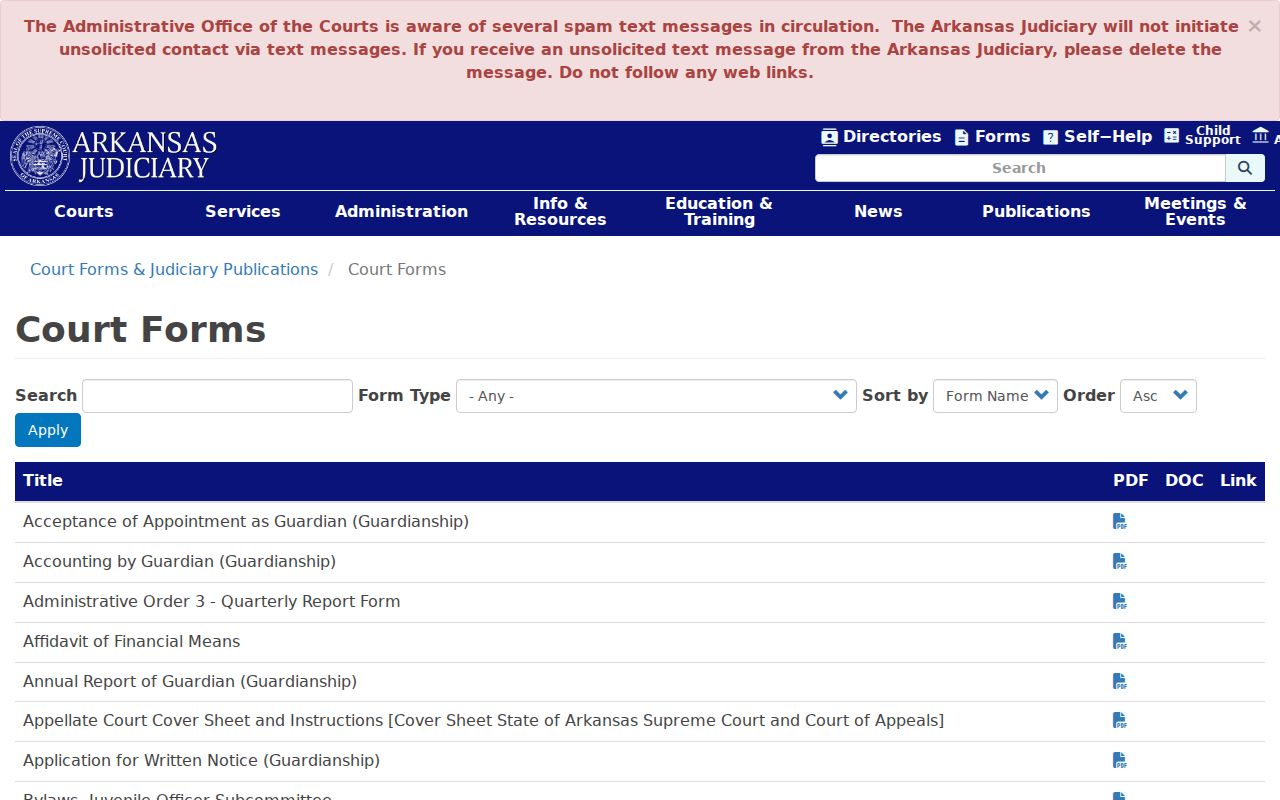
The forms page can help identify a statewide petition, but filing still goes to the court that handled the Lafayette County case. A form does not replace the docket, local filing instructions, or a certified order from the clerk.
What the Lafayette Case File Shows
A Lafayette County case file is organized around the prosecution, not jail intake. It can identify the charge as filed, court events, the plea, motions, final disposition, and sentence. Some financial entries may show online, but a clerk may be needed for a certified balance or order. Public fields can be limited when a case is sealed, juvenile, or otherwise confidential.
| Case Number & Court | Connects the matter to its court, year, and sequence. |
|---|---|
| Charging Document | States the prosecutor-filed allegation, when publicly available. |
| Docket Entries | Lists filings, pleas, motions, warrants, hearings, and other events. |
| Hearing Dates | Shows scheduled or recorded court appearances. |
| Disposition & Judgment | Records whether a charge ended in conviction, dismissal, acquittal, or another outcome. |
| Sentence & Conditions | Shows punishment and court-ordered terms after a conviction. |
Read Lafayette Criminal Docket Terms
Short docket labels can change the meaning of a Lafayette County search result. A charge is an allegation. A disposition is the recorded outcome. A dismissal ends a charge without conviction, while an acquittal is a not-guilty result after trial. Nolle prosequi means the prosecutor chose not to proceed. A capias or bench warrant is a court order for custody and may appear as a docket event.
- Arraignment
- The early hearing where charges are addressed and plea or status issues begin.
- Docket
- The court's chronological list of filings, hearings, and orders.
- Disposition
- The result of a charge or case.
- Concurrent
- Sentences served at the same time.
- Consecutive
- Sentences served one after another.
Lafayette Criminal Cases by Court
Charge level helps route a Lafayette County record search. Felonies go to circuit court. Misdemeanors, traffic citations, violations, and city ordinances may remain in district or city-level records, depending on the filing and agency. Arkansas classifications can appear as the offense statute, charge description, or penalty class. A jail roster may list the initial charge without showing its final class.
When the wrong court was searched, return to the citation, booking record, or Search ARCourts result and identify the displayed court. Then request the file from that clerk. This simple check is more reliable than assuming every local criminal matter sits in the Lafayette County Circuit Court.
Stages of a Lafayette County Criminal Case
A local arrest does not become a filed Lafayette County case by itself. Prosecutors decide what charge to file, and the proper court then creates its case number and docket. Pretrial activity may include motions, bond events, discovery disputes, or a warrant for a missed appearance. A plea or trial leads to disposition, and a conviction may lead to a sentencing order. Timing varies, so no fixed local interval should be assumed.
Case flow: Charges Filed › Arraignment › Pretrial › Plea or Trial › Disposition › Sentencing
The Lafayette County arrest history may show the earlier booking, while the court docket is the source for filed charges and their outcome.
Lafayette Federal Criminal Case Layer
Federal criminal cases do not appear as Lafayette County prosecutions. PACER is the federal court-record system, and Lafayette County falls within the Western District of Arkansas, Texarkana Division. The Eastern District is a separate Arkansas federal court and should not be mistaken for the local federal venue.
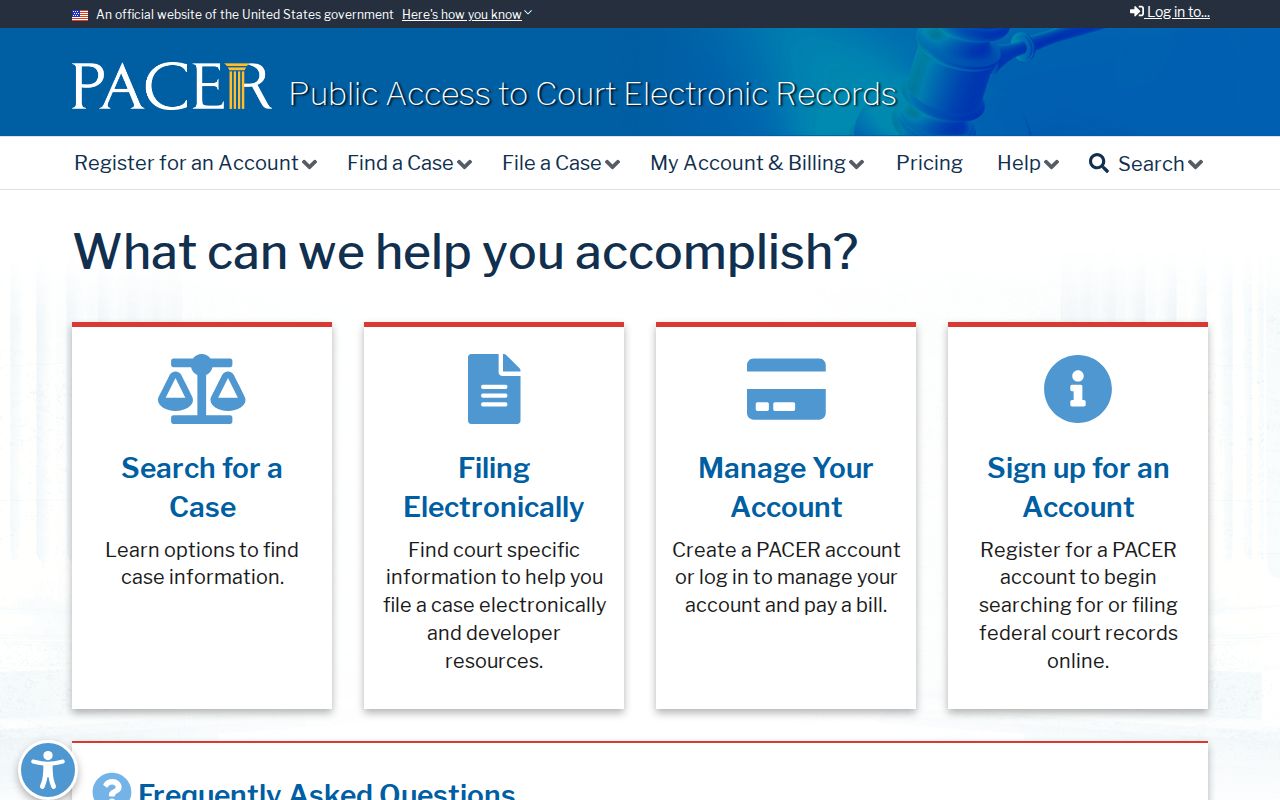
PACER's federal index is relevant only when the United States brought the case. County and state charges remain in Search ARCourts and the Lafayette County clerk system.
The Eastern District of Arkansas website helps distinguish the state's two federal districts.
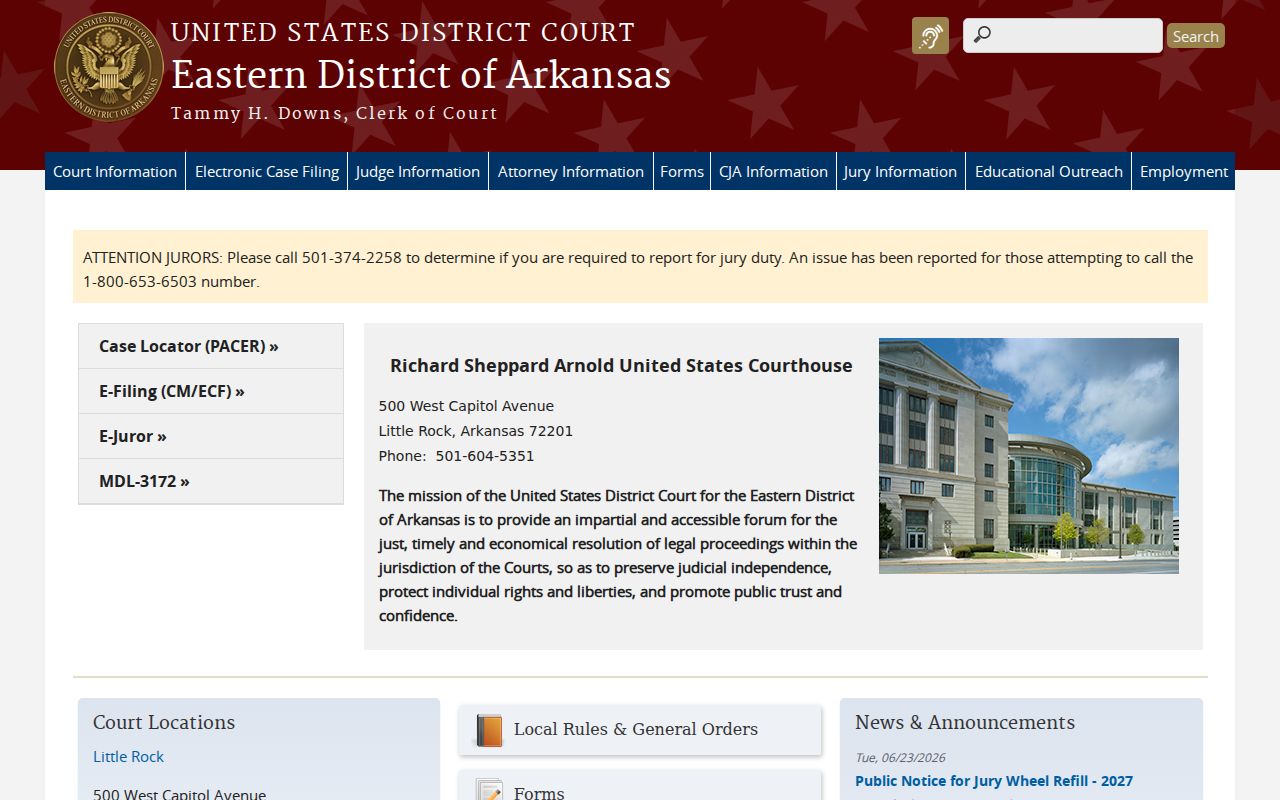
That comparison prevents a common routing error. Lafayette County federal matters belong with the Western District, not the Eastern District.
The Western District of Arkansas is the correct federal district source.
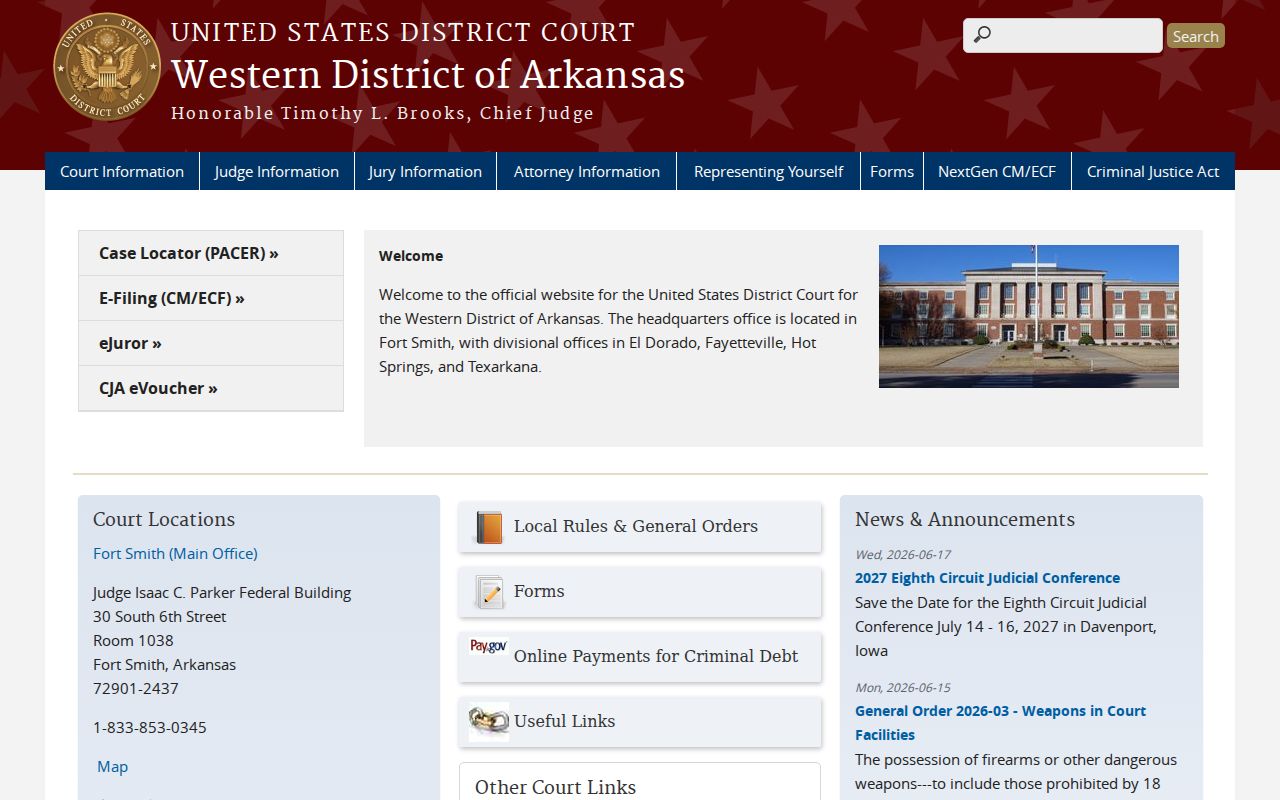
The Western District image identifies the proper federal court layer while keeping it distinct from county circuit and district dockets.
Lafayette Case Access and Restrictions
Arkansas court records are public subject to court rules, confidentiality laws, and sealing orders. Search ARCourts may suppress or limit juvenile cases, sealed records, victim identifiers, and other protected data. An online omission does not prove that no Lafayette County file exists. It can mean the matter is restricted, indexed differently, older, or held only through the clerk.
The Arkansas Freedom of Information Act governs many public records, but court access also follows court rules and judicial orders. Repository criminal-history products have their own dissemination controls. When a case is missing, confirm the court and number with the clerk instead of trying to bypass a restriction.
The Arkansas Code gateway is the primary starting point for current statutory text.
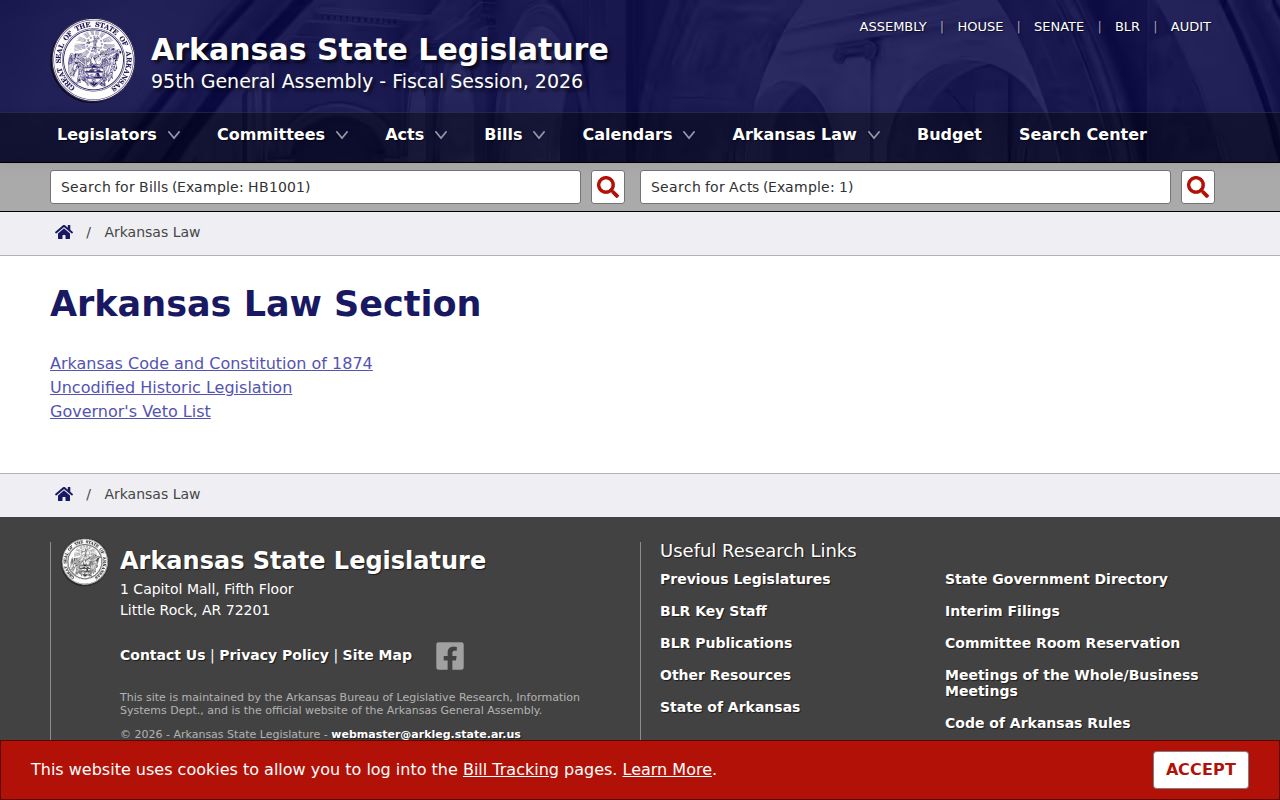
The law source provides context for access, sealing, and criminal classifications, while the court's order controls the treatment of a specific Lafayette County file.