
How to Check Stamps Criminal History
Begin with the event, not a broad name query. The official City of Stamps source is the city-level doorway for a police report, citation, or local contact. No official Stamps arrest blotter, detailed police-records form, fee schedule, or municipal court lookup was found in the reviewed city source. That means a good search must move through a short fallback chain rather than stop at a missing city database.
- Ask Stamps city or police staff for the city-created incident or arrest report, using the date, location, report number, and involved names when known.
- Check the Lafayette County sheriff roster if the person was taken into county custody after a Stamps arrest.
- Search Arkansas Search ARCourts after a citation or criminal charge has had time to be filed.
- Use ARCH through Arkansas State Police for a statewide conviction-history product, not as a substitute for the city report.
- Use the Arkansas DOC locator or ACIC registry only when the question concerns state custody or registration status.
Each step answers a different question. If one source has no result, that does not erase a record held by another custodian.
Stamps Reports Start With the City
Stamps police create records for incidents they investigate and arrests they make. The Lafayette County Sheriff's Office does not become the keeper of that city report merely because a person is later booked into county custody. Ask the city for the incident narrative or arrest report. Ask the sheriff for the jail intake record. Ask the court for filings and the disposition.
A Stamps request should identify the document sought and give staff enough facts to locate it. Useful details include an approximate date, location, report or citation number, involved party names, and the desired format. If no informal form or online request route is offered, Arkansas FOIA provides the public-records framework. The city may still redact active-investigation material, juvenile information, victim details, medical data, sealed matter, and other protected content.
Note: City police records and county jail records can arise from one event, but they remain separate Stamps criminal-history sources.
The Stamps Police Department
The Stamps police or city office is the practical records counter for city-created reports and citations. The research did not locate an official Stamps records-unit page, a published copy fee, a dedicated request form, or confirmed counter hours. Do not assume those details. Use the current contact information on the city source and ask which office holds the requested police record.
Requesters should also ask whether the record remains under active investigation or has moved to court. A report may contain the initial allegation and officer narrative, while the later docket shows what the prosecutor actually filed. Redactions do not always mean the entire Stamps report is closed. They can protect narrow fields while allowing release of the rest.
Stamps City and Police Channel
Starting point for Stamps incident reports, city citations, and current local contact details.
Lafayette County Sheriff
County booking, custody, roster, and sheriff-created records after a Stamps event.
No Official Stamps Blotter Found
The absence of an official Stamps blotter changes the route, not the underlying records. For a recent city incident, contact the city police channel. If the person was jailed, check the Lafayette County inmate search. If charges were filed, use Search ARCourts. These sources should not be forced to answer one another's questions.
A roster entry is strongest for current or recent custody. It can show booking facts but not prove guilt. A city report may exist before any prosecutor files a case. A court index may appear later and use charges different from those shown at booking. ARCH is farther downstream and can lag local events because state records depend on matched fingerprints and reported dispositions.
Best fallback: City report › county booking › court filing › statewide conviction history. Check the source that matches the stage of the Stamps event.
Arrests and Bookings in Stamps
A Stamps police contact can create an incident or arrest report at city level. If custody follows, the Lafayette County jail creates a booking entry with intake details such as booking date, agency, charges at intake, bond, and release or custody status when public. That entry is an arrest-stage record. It is not the final court outcome.
Recent Stamps arrest data may reach the sheriff roster before a case appears in Search ARCourts. After prosecutors file a charge, the court record becomes the source for the case number, filed offense, hearings, motions, plea, dismissal, conviction, or sentence. Charges can change between arrest and filing. Searchers should save the court and case number once it appears because those identifiers are more reliable than a common name.
A full county-level explanation of custody fields and access routes is available in the Lafayette County arrest history material.
When Stamps Arrests Are Too New
If Search ARCourts has no result soon after a Stamps arrest, first check the county inmate roster. Filing takes place after the arrest stage, and not every police contact becomes a criminal case. Confirm the spelling, date, and court filters before treating a blank result as meaningful. If custody ended, the sheriff may still be able to confirm what public booking record exists.
Then return to Search ARCourts after filing time has passed. Select Lafayette County and use a case number if one is available. For a citation, ask Stamps staff which court receives the matter. Lower-level traffic, ordinance, and misdemeanor paths can differ from felony cases in Circuit Court. If a record still cannot be found, ask the relevant clerk about older files, copies, or a case that is not shown online.
Note: A new Stamps booking can be real even when no public court index has appeared, and a booking never proves guilt.
Stamps Municipal Court Records
Stamps citations and local matters may move through municipal, city, or district pathways depending on the charge and current court structure. The official city source reviewed did not publish a stand-alone municipal docket search. Use Stamps staff to identify the correct court, then use the Arkansas Judiciary court directory and Search ARCourts for the public case index.
| Court route | Confirm the current Stamps, district, or circuit destination through city staff or the Arkansas court directory. |
|---|---|
| Likely matter types | Traffic, ordinance, violation, or lower-level criminal matters may use local or district pathways; felonies belong in Circuit Court. |
| Lookup channel | Search ARCourts where indexed, followed by the correct clerk for files or copies. |
| Docket fields | Case number, court, filing date, parties, charge, events, status, hearings, and disposition when public. |
| Copies and fees | Ask the clerk. No official Stamps copy schedule was located in the reviewed source. |
A public index may not include downloadable pleadings or certified orders. Sealed, juvenile, and confidential material can be limited or absent.
Search ARCourts for Stamps Citations
Arkansas Search ARCourts is the statewide case-search system. Search by party name or case number, then narrow by Lafayette County, court, case type, and date range when the live interface offers those filters. A case number is the best key. With a common name, compare the court, filing date, charge context, and docket rather than assuming the first result belongs to the right person.
| Search Field | Best Use | Stamps Tip |
|---|---|---|
| Name or party | Starting without a case number | Use the legal spelling and narrow with county and date. |
| Case number | Precise retrieval | Get it from the citation or clerk when possible. |
| Court or county | Limit broad results | Select Lafayette County and the court Stamps staff identifies. |
| Case type | Separate traffic and criminal records | Choose the category shown on the citation or filing. |
| Date range | Older or common-name cases | Use the event or citation date as a guide, not an exact filing date. |
For a judgment, sentencing order, complaint, or certified copy, contact the clerk. An online index does not guarantee document access.
Where Stamps Criminal Records End Up
A Stamps record can move through several hands. The city keeps its incident or arrest report. County custody creates a jail booking. The proper Arkansas court keeps the filed case and final disposition. Reported fingerprints and dispositions can then feed the Arkansas State Police and Arkansas Crime Information Center repository channels.
Record flow: Stamps Police › Lafayette County Courts › Arkansas State Police Identification Bureau and Arkansas Crime Information Center
That flow is not instant. Missing fingerprints, changed charges, or an unmatched disposition can cause one source to lag another. For recent Stamps activity, begin at city or jail level. For a completed case, use Search ARCourts and the clerk. For a statewide conviction-history query, use Arkansas Criminal History Search, or ARCH.
Sheriff App Access From Stamps
The Lafayette County Sheriff AR app gives Stamps residents a mobile route to the inmate roster, local sex offender map, tips, alerts, and sheriff contact functions. Its official Google Play listing is one of the city-page image sources in the manifest.
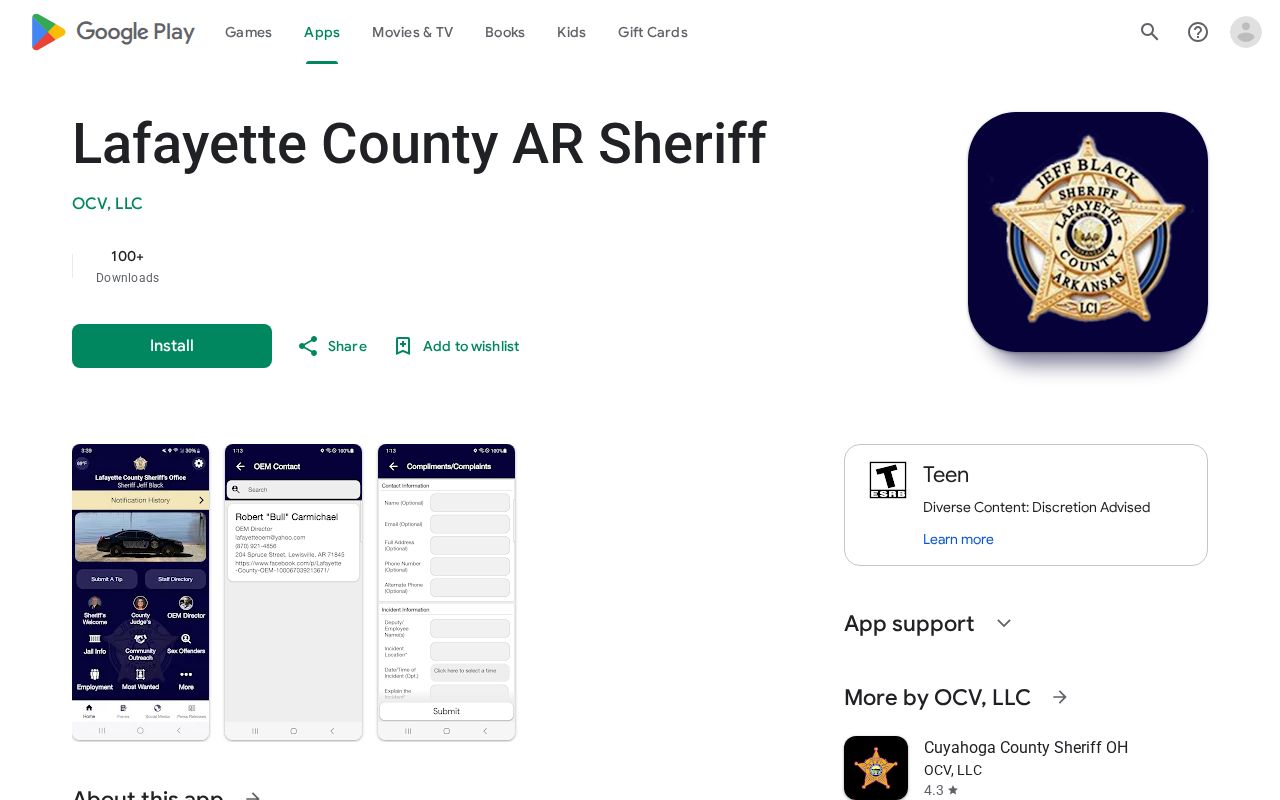
The app can make a current county booking or map easier to reach, but it does not hold the Stamps police report or replace the court docket.
Use the roster for county custody and the app's alert tools for public-safety updates. Send city-report requests to Stamps. Move to Search ARCourts for a filed case. This division keeps mobile convenience from blurring record ownership.
Stamps Convictions and State Custody
After a Stamps-origin case ends in a state-prison sentence, the Arkansas Department of Corrections Inmate Population Search becomes the right custody tool. It covers sentenced state custody, not a recent Lafayette County jail booking. The court file remains the source for the conviction and sentence order.
The manifest's official ADC inmate-search image shows this later stage in the Stamps record chain.
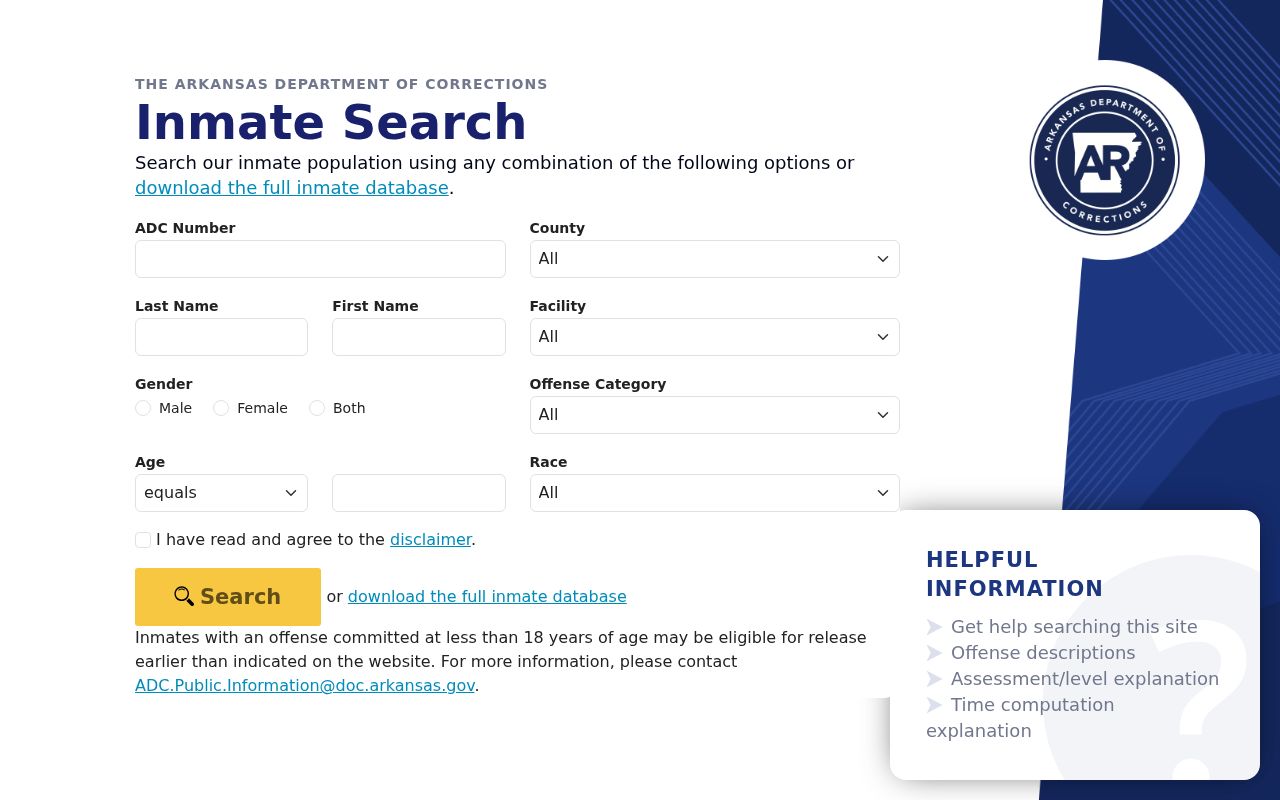
Check ADC when the question is state custody. Check the sheriff for local custody and Search ARCourts for the case outcome.
Statewide conviction history is a separate product available through ARCH and Arkansas State Police channels. It can be useful for self-review, but it should not be mistaken for a copy of every Stamps police report or court filing.
Public Access Rules
Stamps police and city records fall under Arkansas public-records law unless a specific exemption applies. Court records follow Arkansas court access rules, sealing orders, and confidentiality law. Repository criminal-history information is controlled under Title 12 rather than released in the same way as an ordinary city record. Juvenile data, victim details, active-investigation material, medical or security information, and sealed records may be withheld or redacted.
Key Statutes:
Arkansas Freedom of Information Act, Ark. Code Ann. § 25-19-105 generally opens public records unless an exemption permits withholding or redaction.
Arkansas Title 12 criminal-history provisions separately control state repository access and dissemination.
Arkansas court access rules govern public dockets subject to sealing and confidentiality law.
The U.S. Census data portal is the official source used to establish Stamps among the county's top incorporated communities.
City population context explains why a dedicated Stamps route helps, but official record access still depends on the agency that created each document.