
How to Check Lafayette County Criminal History
Lafayette County has no single all-purpose criminal records portal. Begin with a full legal name, spelling variants, an approximate date, and a case number when one is known. The best first source depends on the question. Arkansas Search ARCourts indexes filed court cases. The Lafayette County Sheriff's Office inmate route covers current or recent county custody. Arkansas Criminal History Search, often called ARCH, supplies the state's public conviction-history channel. Arkansas Department of Corrections search covers sentenced state custody, while the ACIC registry covers sex offender status.
Use the sources as a chain, not as substitutes. A new booking may reach the sheriff roster before a prosecutor files a case. A court docket may show a dismissal or sentence that has not yet matched cleanly to a repository entry. Certified pleadings, judgments, and sealed-order questions still require the clerk. The following order keeps the search tied to the record's source.
- Search Arkansas Search ARCourts by name or case number, then narrow the results to Lafayette County and the right court or date.
- For a recent arrest or present custody, check the official sheriff inmate route and the Lafayette County Sheriff AR app.
- Use ARCH when the goal is an Arkansas public conviction-history search, and follow Arkansas State Police instructions for an official fingerprint process.
- Check Arkansas Department of Corrections when a sentence may have led to state custody, and use ACIC for registry status.
- Ask the filing agency or court clerk for reports, certified copies, older files, or material that the public index does not display.
Three Lafayette County Record Systems
A court index, jail roster, and repository search each capture a different stage. Search ARCourts follows a case after charges are filed. It may show the court, case number, filing date, hearings, docket events, disposition, and sentence. The sheriff roster follows custody intake. It may show booking time, booking charges, bond, agency, and release status. ARCH is a state repository product whose public channel focuses on conviction information and matched identifiers.
This split explains many apparent conflicts. Charges stated at booking can change before filing. A person can leave jail while a case remains open. A dismissal can be clear on the docket even if another system has not updated. Match names with dates and court context, then verify a key result with the office that created it. The Lafayette County criminal court case records page gives the deeper court-file path.
| Official channel | Best use | Fallback when missing |
|---|---|---|
| Search ARCourts | Filed charges, docket events, and dispositions | Ask the court clerk for older files, copies, or certification |
| Sheriff inmate route and app | Current or recent Lafayette County custody | Contact the sheriff for release, bond, or roster questions |
| Originating police agency | Incident and arrest reports | Send a focused Arkansas FOIA request to that agency |
| ARCH and Arkansas State Police | State conviction history or official check instructions | Follow the state fingerprint process for the required record type |
| Arkansas DOC and VINELink | State custody or notification | Confirm the sentence in the court file |
Lafayette County Official Background Checks
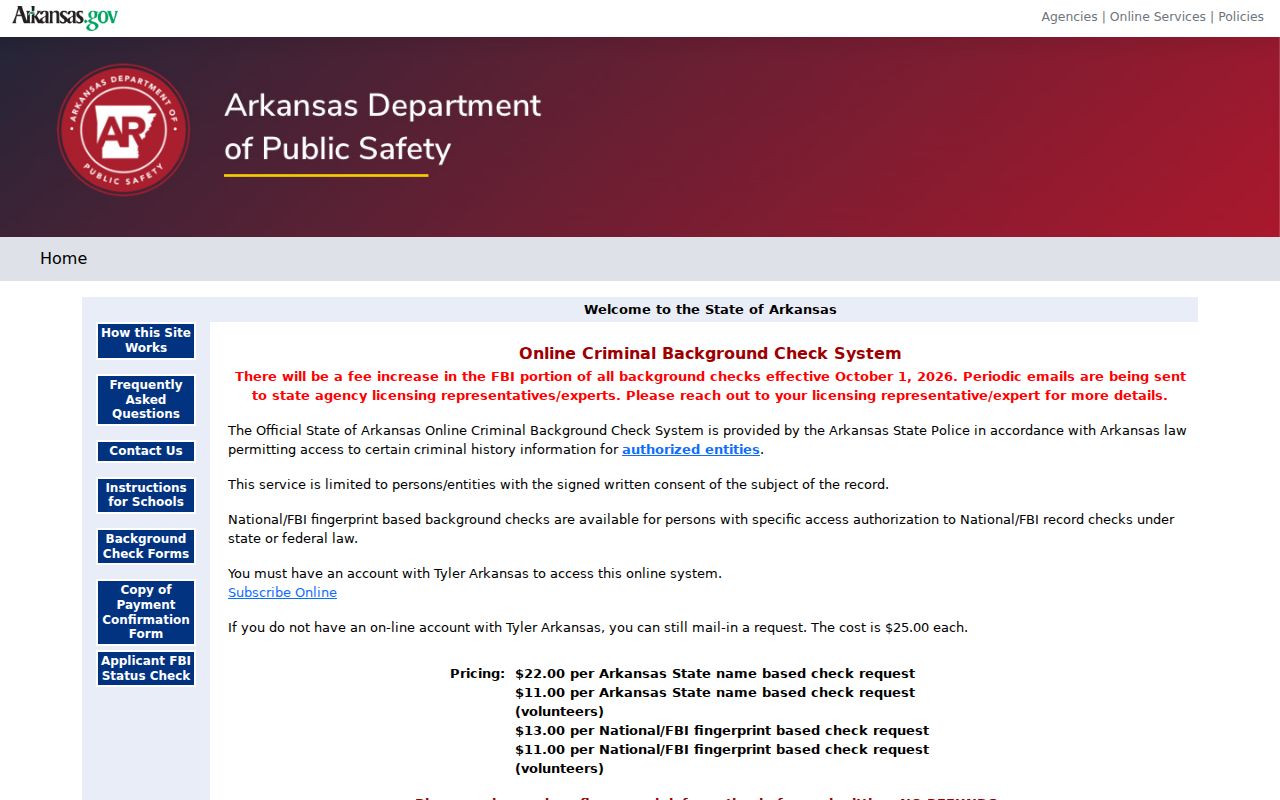
The Arkansas State Police Identification Bureau and Arkansas Crime Information Center channels handle state criminal-history information. The public Arkansas Criminal History Search provides a fee-based name search focused on conviction information. It is distinct from the restricted Arkansas Online Criminal Background Check System, which requires an authorized account and login. Neither product is the same as reading a Lafayette County court docket.
For self-review that must be tied to fingerprints, follow Arkansas State Police instructions and the reason code for the request. Some Arkansas workflows use IDEMIA or IdentoGO scheduling, but the research did not confirm a Lafayette County enrollment location. An FBI Identity History Summary is a separate subject-only federal record review. Check the live official instructions and checkout screens for current fees because no stable local fee or fingerprint site was documented.
The official ARCH search screen shows the public state channel described above.
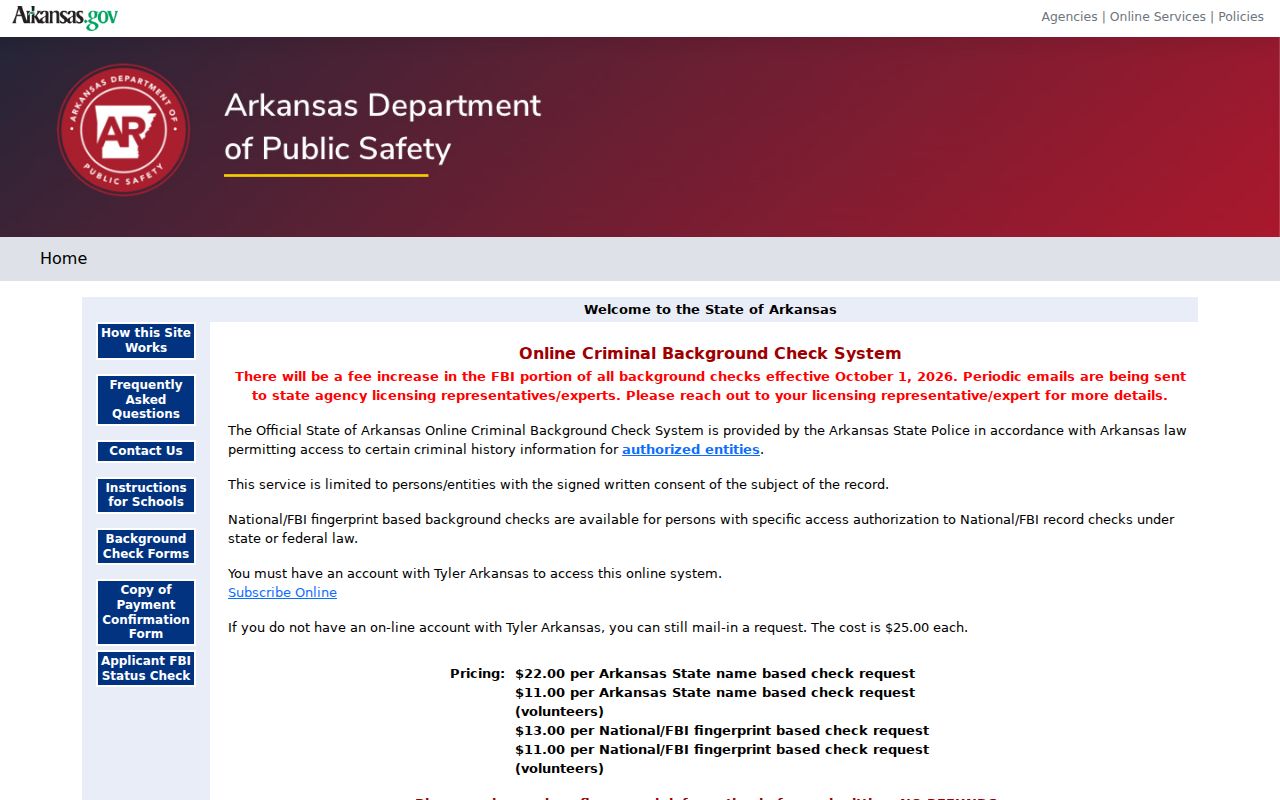
That portal should be read as a state conviction-history product, not a full copy of every local arrest report or court file.
Lafayette County Court Case Search
Arkansas Search ARCourts is the statewide public index for Lafayette County criminal cases. A case number gives the cleanest route. With a name search, use legal spelling and compare the county, court, filing date, and case type before treating a result as the right person. Common names require care, and an index entry does not promise that every pleading can be downloaded.
| Search field | How it helps | Use note |
|---|---|---|
| Name or party | Finds cases tied to a legal name | Try known spelling variants |
| Case number | Targets one docket | Best identifier when known |
| Court or county | Narrows statewide results | Select Lafayette County |
| Case type | Separates criminal and other files | Use the portal's current filters |
| Date range | Reduces older or common-name matches | Use an approximate filing span |
The official statewide interface makes the court and filter split visible.
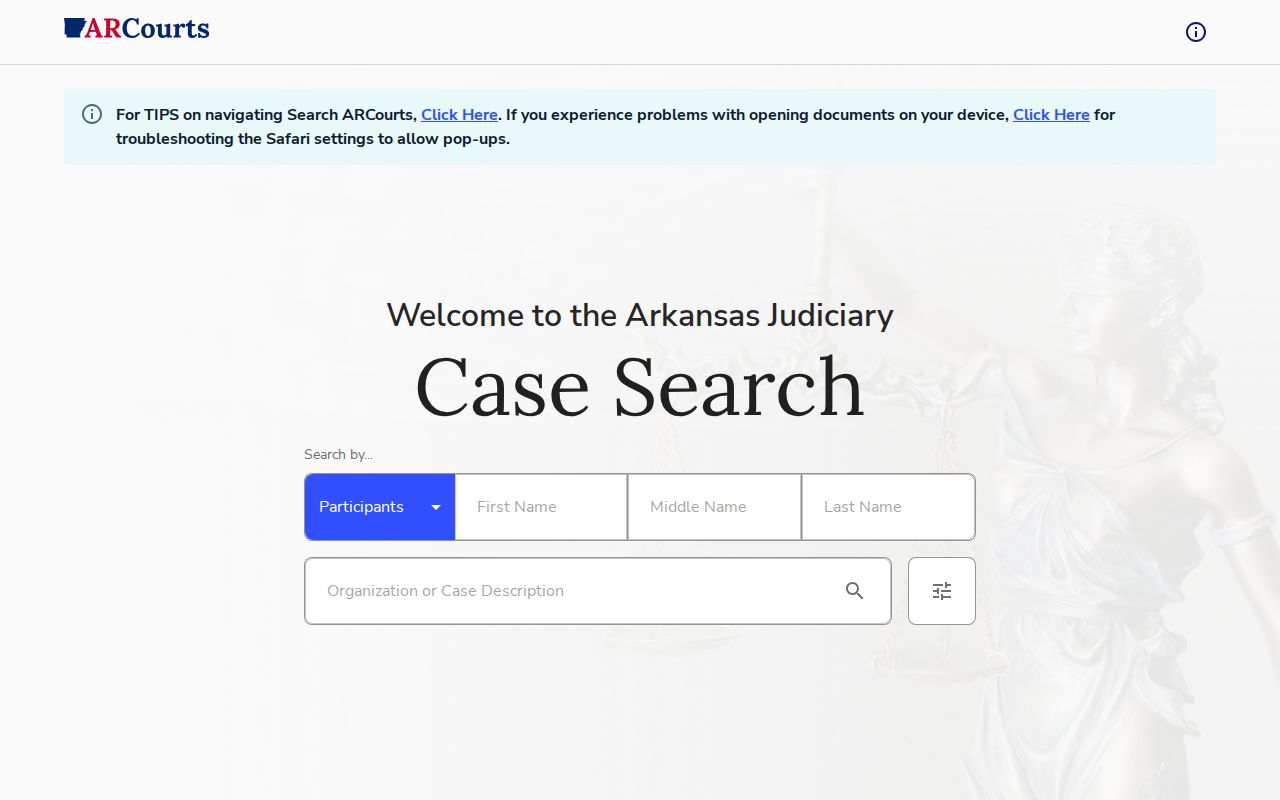
Record the court and case number from a likely match, then use those details when requesting a copy from the clerk.
Types of Lafayette County Criminal Records
The source reveals what the record can prove. An arresting agency creates an incident or arrest report. The jail makes a booking file when it accepts a person into custody. A prosecutor and court create the filed charge, docket, orders, disposition, and sentence. Arkansas State Police and ACIC repository systems depend on fingerprint and disposition reporting, while Arkansas Department of Corrections records begin after state custody or supervision becomes relevant.
City records also remain agency-specific. Lewisville, Stamps, or Bradley records can start with a city office or police agency even if the sheriff later holds the booking. Warrants come from the issuing court and are served by law enforcement. Registry listings are maintained statewide by ACIC with local duties at the sheriff's office.
- Arrest and booking records: show the agency action and jail intake, not guilt.
- Criminal court files: show filed charges, hearings, pleas, orders, outcomes, and sentences.
- Repository entries: link reported arrest and disposition cycles through state identifiers.
- Warrant records: identify the issuing court, reason, status, and service details when public.
- Custody and registry records: cover jail, state prison, notification, supervision, or registration status.
Arkansas offense class helps determine the court and the shape of the record. Felonies are circuit-court matters in Lafayette County. Traffic, ordinance, and lower-level misdemeanor cases may follow district or city pathways based on the charge and citing agency. A booking label may name an alleged class, but the filed court charge and final disposition control the case outcome. Search the docket before relying on an intake description.
Probation and parole are state-centered through the Arkansas Department of Corrections Division of Community Correction rather than a county probation database. Search ARCourts for the sentence, revocation petition, hearing, warrant, or amended order. Use Arkansas DOC information and VINELink for custody context, then contact the state supervision office serving Lafayette County when a public status question cannot be resolved from those sources. Officer notes, treatment files, and risk assessments are not ordinary public lookup records.
Lafayette County Sheriff App
The official Lafayette County Sheriff's Office website is the strongest local digital doorway. Its description names the inmate roster and local sex offender map, and its page metadata confirms the Lafayette County Sheriff AR mobile app. The app listings advertise resident alerts, tips, sheriff contact tools, the roster, and registry mapping. These are useful shortcuts in a county where several broader searches live on state systems.
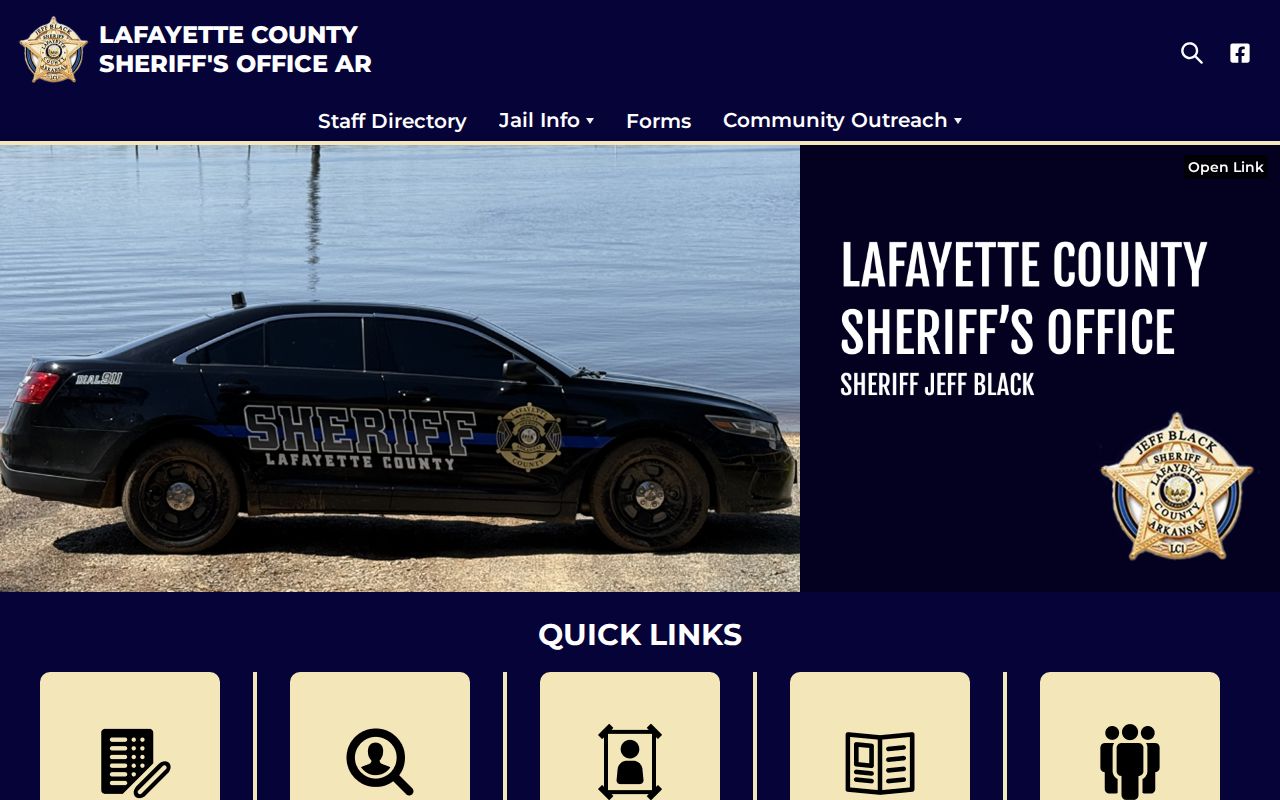
The sheriff channel is still limited by record type. Use it for current custody, sheriff-created reports, local warrant confirmation, and county registry links. Use the originating city for its police report and the court clerk for the case file.
What a Lafayette County Criminal Record Shows
Fields change with the custodian. A repository record is organized around a person and matched arrest-disposition cycles. A court file is organized around a case number and docket. A booking profile is organized around jail intake. Read the labels in that context, and do not infer a conviction from a charge or bond entry.
| Name & Identifiers | Legal name, aliases, date of birth fields, sex, race, and state or federal identifiers where lawfully displayed. |
|---|---|
| Arrest / Booking Data | Arrest date, agency, booking number, intake time, booking charges, bond, and release status. |
| Charges & Statutes | Offense descriptions, filed counts, and statute references supplied by the agency or court. |
| Disposition | The result of each charge, such as conviction, dismissal, acquittal, or a prosecutor's decision not to proceed. |
| Sentence | Custody, probation, suspended terms, fines, costs, restitution, or other orders. |
| Custody / Supervision Status | County jail, Arkansas DOC, release, revocation, probation, or parole information when the source publishes it. |
Lafayette County Custody Tools
Choose a custody search by where the person may be held. The sheriff's inmate route is the local source for current or recent county custody. Arkansas Department of Corrections Inmate Search covers sentenced state custody. VINELink is a notification supplement rather than the original jail or court file. A person can move between these systems, so an old result should be checked against the current custodian.
The U.S. Census QuickFacts source supplies context for the small county served by these separate custody systems.
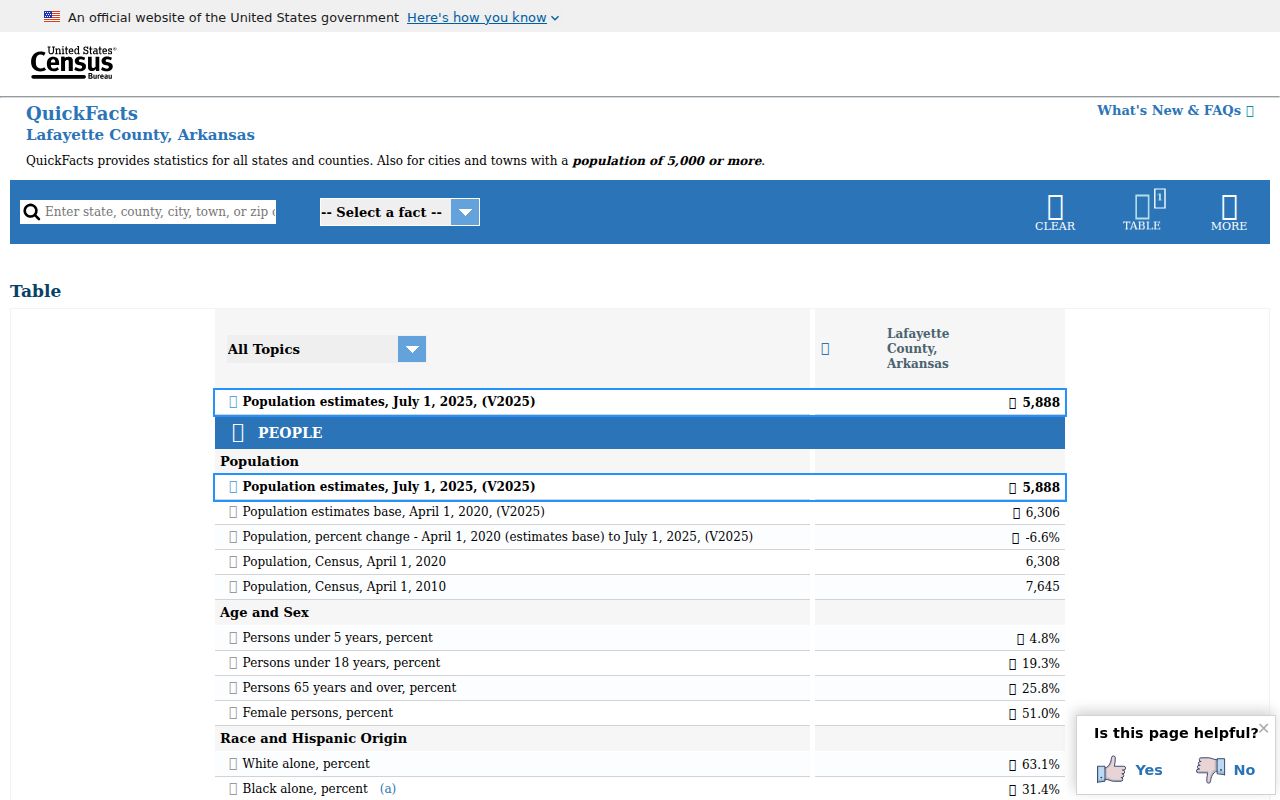
The image source supplies county context, while custody status itself must come from the sheriff, Arkansas DOC, or VINELink channel described above.
Public Access Laws for Lafayette County Records
The Arkansas Freedom of Information Act generally opens government records unless another law or exemption permits withholding. It can support requests for public sheriff or city records, but it does not erase limits on active investigations, juvenile information, victim details, jail security data, or sealed cases. Court access also follows Arkansas court rules and sealing orders. State repository criminal-history products are controlled under separate Title 12 dissemination provisions.
Key Statutes:
Ark. Code Ann. § 25-19-105 - public records are open unless a specific exemption supports withholding or redaction.
Arkansas Code Title 12 - criminal-history dissemination and registry records follow controls beyond ordinary local records requests.
Title 16, Chapter 90, Subchapter 14 - eligible Arkansas criminal records may be sealed by court order.
Title 12, Chapter 12, Subchapter 9 - registration and notification rules govern public sex offender information.
Lafayette County FOIA Requests
No detailed sheriff records form, fee schedule, named custodian page, or published turnaround time was found in the official Lafayette County sources reviewed. That gap makes a clear request more important. Identify the agency that wrote the record, give a focused date range, include a report or case number when known, and say whether inspection or copies are requested. Contact the sheriff for sheriff-created reports and the correct city for a Lewisville, Stamps, or Bradley report.
Arkansas FOIA does not guarantee an unredacted file. Active investigative work, juvenile data, victim-identifying facts, medical or security-sensitive jail information, and sealed material may be withheld. If the desired item is a judgment, plea, or sentencing order, request it from the clerk rather than asking the sheriff for the court's file.
Restricted Lafayette County Criminal Records
Arkansas uses the term sealing under the Comprehensive Criminal Record Sealing Act and related provisions. A sealed record is restricted from ordinary public access, not erased for every government purpose. Juvenile records, victim and minor identifiers, active investigations, and some non-conviction repository information also have distinct access limits.
For a Lafayette County case, first confirm the court, case number, charges, and disposition. Compare that result with the Arkansas eligibility rules, obtain the correct state court form, and file in the court that handled the matter. The prosecutor receives notice when law or procedure requires it, and the court may hold a hearing. After an order is entered, keep a certified copy and recheck the court, local, and repository sources. If public data remains, begin with the clerk and the order rather than assuming each system updates at once.
Lafayette County Warrant Checks
No standalone official Lafayette County warrant search was located. Use the issuing court and sheriff instead. Search ARCourts dockets may show warrant, capias, failure-to-appear, bond-forfeiture, or revocation events. A city or district court may hold a bench warrant tied to a missed lower-level appearance, while a circuit file may carry a felony or revocation warrant. The sheriff can confirm active local warrant status and explain the proper surrender or bond channel.
Do not rely on an unofficial people-search list. Confirm the case number, warrant type, issuing court, reason, date, and bond status with the source. After the matter is resolved, check that both the court docket and law-enforcement record reflect the change.
Criminal Records by City in Lafayette County
Stamps, Lewisville, and Bradley are the three incorporated communities identified by the research for city coverage. City-created incident reports and citations begin with the city agency or office. A later booking can belong to the Lafayette County sheriff, and a filed case can appear in Search ARCourts. Each city page keeps that route local while pointing to the county or state system only when the record moves there.
Stamps Criminal History
Start with Stamps for city reports, then use the sheriff for bookings and Search ARCourts for filed cases.
Lewisville Criminal History
Lewisville police, county-seat court channels, and the sheriff each hold a different part of the trail.
Bradley Criminal History
Confirm the originating agency, then route custody to the sheriff and filed matters to the court index.
Lafayette County Registry Searches
The Arkansas Crime Information Center maintains the statewide public sex offender registry. The Lafayette County Sheriff's Office supplies a county map doorway and handles local registration or verification duties, but no detailed local appointment schedule or fee was published in the reviewed sources. Search ACIC by name, county, city, ZIP code, or address fields as the current interface allows. Use NSOPW when a search must cross state lines.
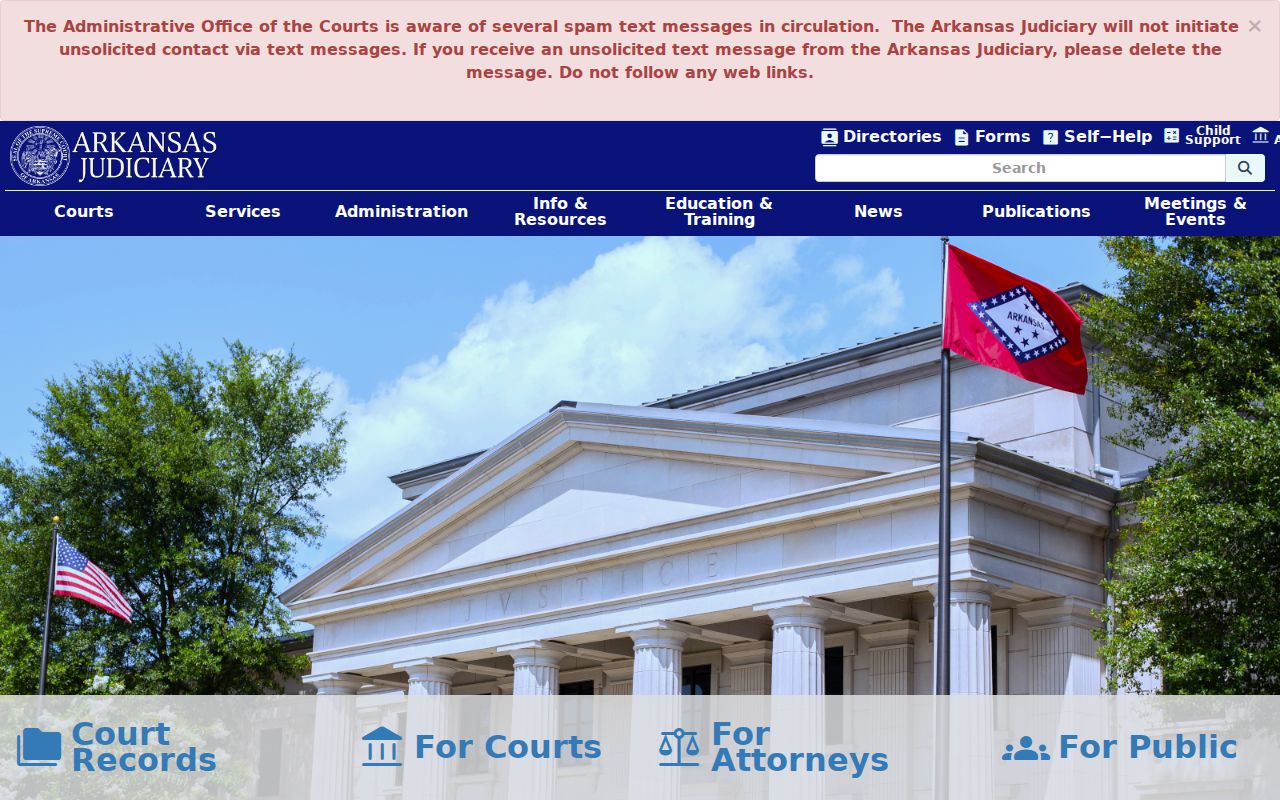
The Arkansas Judiciary homepage shows the separate court gateway that should be used when a registry entry needs to be compared with its public court case.
Registry data exists for lawful public-safety awareness. Never use it to threaten, harass, or take vigilante action, and verify questions about compliance with law enforcement.
Lafayette County Record Terms
Short docket and custody labels can change the meaning of a result. These terms help separate an accusation, a court event, and a final outcome in Lafayette County records.
- Booking
- Jail intake that creates a custody record, fingerprints, photograph, and charge summary.
- Docket
- The court's running list of filings, hearings, orders, and case events.
- Disposition
- The outcome of a charge or case, such as conviction, dismissal, or acquittal.
- Capias
- A court order or warrant directing that a person be taken into custody.
- Sealing
- The Arkansas court process that limits public access to an eligible record.
A charge describes an allegation. A disposition tells what the court ultimately did. When the public index is unclear, obtain the underlying order from the clerk before drawing a conclusion.
The restricted Arkansas background-check portal illustrates why an authorized system should not be confused with the open court index.
Public self-review, court research, and authorized official checks therefore require different routes even when they concern the same person.